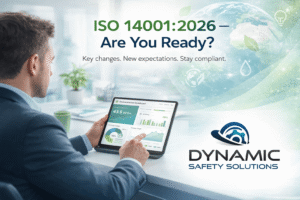
ISO 14001 is evolving.
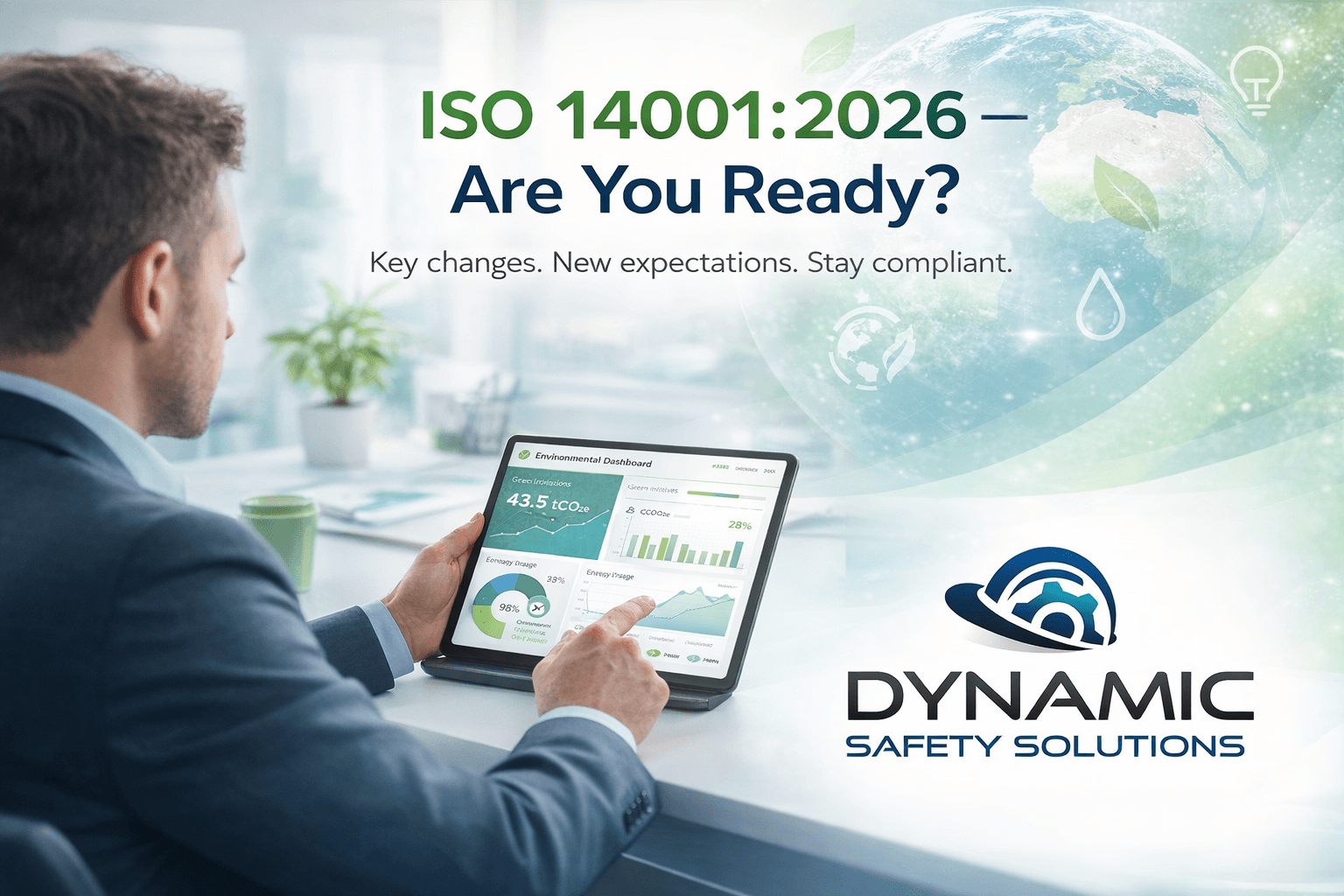
The updated version of the world’s leading Environmental Management System (EMS) standard is expected to be published in 2026, marking the first major revision in over a decade. The goal is simple: keep the standard relevant, practical, and aligned with modern environmental and business challenges.
At Dynamic Safety Solutions, we’re already helping clients prepare for what’s coming next.
Why ISO 14001 is Changing
Environmental expectations have shifted significantly in recent years.
The updated standard reflects:
Increased focus on climate change and sustainability
Greater emphasis on supply chains and external providers
Stronger alignment with ESG and stakeholder expectations
A move from compliance-based systems to strategic environmental management
This ensures ISO 14001 continues to deliver real value, not just certification.
Key Changes in ISO 14001:2026
1. Stronger Focus on Climate & Environmental Context
Organisations will need to consider broader environmental factors such as:
Climate change
Resource use
Biodiversity and pollution impacts
This expands the EMS beyond internal operations to a wider environmental responsibility.
2. Enhanced Leadership & Accountability
Top management will be expected to:
Take greater ownership of environmental performance
Drive engagement across all levels of the business
Embed environmental thinking into decision-making
This pushes ISO 14001 further into core business strategy.
3. New Requirement: Managing Change
A key addition is formal “Planning and Managing Change”.
Businesses must:
Identify changes (internal or external)
Assess environmental impact
Plan and control these changes effectively
This is a major shift towards proactive risk management.
4. Greater Control of Supply Chain & Outsourced Activities
The scope now expands from outsourced processes to:
Externally provided products and services
Supply chain environmental impact
This is particularly important for sectors like construction, utilities, and manufacturing.
5. Lifecycle Perspective Strengthened
Organisations must consider environmental impact across:
Upstream suppliers
Internal operations
Downstream use and disposal
This ensures a full lifecycle approach, not just site-level compliance.
6. Improved Emergency Planning
Companies must now:
Identify all potential emergency situations
Not just those considered “reasonably foreseeable”
This increases resilience and preparedness.
7. More Structured Audits & Performance Evaluation
Internal audits will require:
Defined objectives
Clear focus on EMS effectiveness
Driving better performance and continuous improvement.
What This Means for Your Business
The changes are not about adding complexity – they are about adding value.
With ISO 14001:2026, businesses will:
Improve environmental performance and efficiency
Strengthen compliance and reduce risk
Enhance reputation and win more work (especially in tenders)
Align with sustainability and ESG expectations
ISO 14001 becomes a business growth tool, not just a compliance exercise.
When Do You Need to Act?
ISO 14001:2026 expected publication: 2026
Likely transition period: up to 3 years
Deadline to transition: ~2029 (expected)
Starting early gives you a clear competitive advantage.
Why choose Dynamic Safety Solutions?
- Transition from ISO 14001:2015 to 2026
- Review and upgrade existing Environmental Management Systems
- Integrate ISO 14001 with ISO 9001 & ISO 45001
- Prepare for certification and audits
- Align environmental strategy with business goals
Ready to Get Ahead of the Changes?
Don’t wait for the deadline.
Get in touch with our team today to review your current ISO 14001 system and start preparing for the 2026 update.
📞 ROI: +353 98 28489
📞 UK: +44 28 8250 2102
📧 Email: [email protected]
🌐 Request a Quote: https://dsafetys.com/blog/get-a-quote-for-iso-certification/