Lifting equipment failures can lead to serious injuries, project delays, equipment damage, enforcement action, and major liability exposure for businesses across construction, utilities, engineering, manufacturing, and industrial sectors.
That is why LOLER inspections are a legal requirement for many businesses operating lifting equipment in Ireland and the UK.
But what exactly does a LOLER inspection include, what equipment requires examination, and what should employers expect during the process?
This guide explains everything employers need to know about LOLER inspections, lifting equipment compliance, inspection frequencies, common defects, and legal responsibilities.
What Is a LOLER Inspection?
A LOLER inspection is a Thorough Examination of lifting equipment carried out under the Lifting Operations and Lifting Equipment Regulations (LOLER).
The purpose of the inspection is to ensure lifting equipment:
- Is safe to operate
- Remains structurally sound
- Is suitable for use
- Has no defects that could create danger
- Continues to meet legal compliance requirements
A LOLER inspection must be completed by a competent person with the appropriate knowledge, experience, and understanding of lifting equipment and lifting operations.
Learn more about our services here:
What Does LOLER Stand For?
LOLER stands for:
Lifting Operations and Lifting Equipment Regulations
These regulations are designed to ensure lifting equipment is:
- Properly maintained
- Inspected regularly
- Safe for use
- Used correctly by trained operators
LOLER applies across a wide range of industries including:
- Construction
- Utilities
- Infrastructure
- Warehousing
- Manufacturing
- Agriculture
- Engineering
- Facilities management
What Equipment Requires LOLER Inspection?
Many employers assume LOLER only applies to cranes. In reality, the regulations apply to a large range of lifting equipment and lifting accessories.
Equipment commonly requiring LOLER inspection includes:
- Telehandlers
- Forklifts used for lifting operations
- Mobile cranes
- Excavators used for lifting
- MEWPs
- Vehicle lifts
- Chain blocks
- Hoists
- Overhead gantry cranes
- Lifting beams
- Goods lifts
- Lifting accessories
- Slings
- Shackles
- Eyebolts
- Hooks
- Wire ropes
If equipment is used for lifting or lowering loads, LOLER may apply.
Related reading:
What Is Included in a LOLER Inspection?
A LOLER inspection is significantly more detailed than a basic visual check or routine maintenance inspection.
A competent inspector will thoroughly examine the equipment for defects, wear, damage, and safety issues that could create risk during lifting operations.
Identification & Certification Checks
The inspection begins by verifying:
- Equipment serial numbers
- Asset identification
- Safe Working Load (SWL)
- Manufacturer information
- Existing certification
- Previous inspection records
- Inspection history
This ensures equipment remains traceable and compliant.
Structural Examination
Inspectors carefully examine the structural condition of the equipment, including:
- Cracks
- Distortion
- Corrosion
- Bent components
- Fatigue damage
- Excessive wear
- Damaged welds
Structural defects are one of the most serious risks identified during lifting equipment inspections.
Mechanical Component Inspection
Mechanical and moving components are checked for:
- Wear and deterioration
- Hydraulic leaks
- Alignment issues
- Faulty movement
- Damaged parts
- Loose fixings
- Excessive play
Components inspected may include:
- Pins and bushes
- Chains
- Cylinders
- Bearings
- Hook assemblies
- Brake systems
- Rotating parts
Safety Device Inspection
Safety systems play a major role in preventing lifting incidents.
Inspectors typically examine:
- Emergency stops
- Load limiters
- Warning alarms
- Limit switches
- Stability systems
- Locking mechanisms
- Safety catches
- Overload protection systems
Faulty or bypassed safety devices are common causes of lifting accidents.
Inspection of Lifting Accessories
Lifting accessories experience significant wear during operation and are commonly identified with defects during LOLER examinations.
Accessories inspected include:
- Chains
- Slings
- Shackles
- Hooks
- Wire ropes
- Eyebolts
- Lifting beams
Inspectors check for:
- Stretching
- Fraying
- Corrosion
- Deformation
- Heat damage
- Missing identification tags
- Excessive wear
Functional Testing
Where appropriate, inspectors may also carry out operational testing to ensure:
- Safe lifting functions
- Stable movement
- Controlled operation
- Effective braking
- Correct mechanical performance
This helps identify issues that may not be visible during static examination alone.
How Often Are LOLER Inspections Required?
Inspection frequency depends on the equipment type and how it is being used.
Typical LOLER inspection intervals include:
Every 6 Months
For:
- Lifting accessories
- Equipment used for lifting people
Every 12 Months
For:
- General lifting equipment
More Frequently
Where:
- High-use environments exist
- Harsh operating conditions apply
- Manufacturer guidance requires it
- Risk assessments identify increased risk
Employers should also ensure daily and pre-use inspections are completed between formal LOLER examinations.
Further reading:
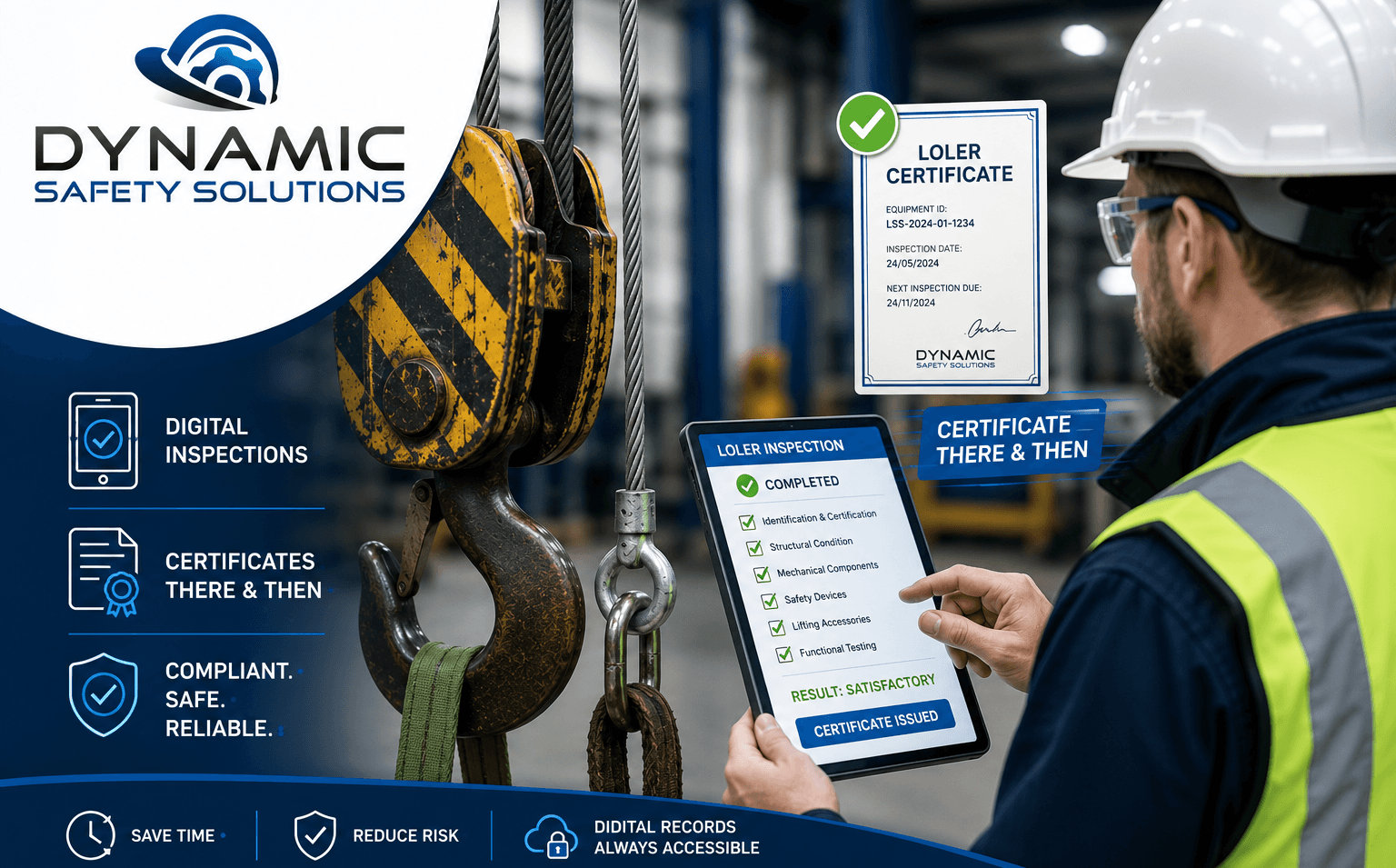
What Documentation Is Provided After a LOLER Inspection?
After the inspection, businesses should receive:
- Thorough Examination Report
- LOLER certificate
- Defect reports
- Recommendations for corrective actions
- Compliance documentation
- Inspection records
These documents are often requested during:
- Client audits
- HSA inspections
- Insurance investigations
- Principal contractor reviews
- ISO audits
Digital inspection systems are increasingly being used to improve inspection visibility and audit readiness.
Read more:
Common LOLER Inspection Failures
Some of the most common issues identified during LOLER inspections include:
- Expired certification
- Damaged lifting accessories
- Cracked welds
- Hydraulic leaks
- Excessive chain wear
- Missing safety labels
- Missing inspection records
- Unauthorised equipment modifications
- Defective hooks and slings
- Faulty limit switches
- Corrosion and structural deterioration
Many businesses only discover these issues after:
- An incident occurs
- A client audit takes place
- Equipment fails unexpectedly
- HSA inspectors attend site
Why LOLER Inspections Matter
LOLER inspections are not simply a paperwork exercise.
A proper inspection programme helps businesses:
- Reduce accident risk
- Improve equipment reliability
- Protect workers and pedestrians
- Reduce downtime
- Improve audit readiness
- Meet legal obligations
- Reduce liability exposure
- Improve contractor compliance performance
For businesses operating under:
- ISO 45001
- Safe-T-Cert
- Principal contractor frameworks
- Utilities contractor standards
…lifting equipment compliance is heavily scrutinised.
Related services:
LOLER Inspections with Dynamic Safety Solutions
At Dynamic Safety Solutions, we provide professional LOLER inspections and lifting equipment examinations across Ireland, Northern Ireland, and the UK.
Our inspections help businesses:
- Maintain legal compliance
- Improve lifting safety
- Keep equipment operational
- Reduce operational risk
- Maintain audit-ready records
We inspect lifting equipment across:
- Construction
- Utilities
- Infrastructure
- Industrial
- Manufacturing
- Engineering sectors
Explore our services:
Frequently Asked Questions About LOLER Inspections
What is checked during a LOLER inspection?
A LOLER inspection checks the structural condition, mechanical components, lifting accessories, safety devices, and operational functionality of lifting equipment to ensure it remains safe and compliant.
How often should lifting equipment be inspected?
Most lifting equipment requires inspection every 12 months, while lifting accessories and equipment used for lifting people are generally inspected every 6 months.
Who can carry out a LOLER inspection?
LOLER inspections must be completed by a competent person with sufficient technical knowledge and experience relating to lifting equipment.
Does LOLER apply in Ireland?
Yes. While LOLER is UK legislation, equivalent legal requirements around lifting equipment safety and inspection apply in Ireland through workplace safety legislation and best practice compliance standards.
What happens if lifting equipment fails inspection?
If serious defects are identified, the equipment may be removed from service until repairs are completed and the equipment is deemed safe to use.
Final Thoughts
A LOLER inspection is designed to identify defects before they become serious safety incidents, operational failures, or compliance issues.
For many businesses, lifting equipment problems are only discovered when:
- Equipment fails
- An incident occurs
- An audit takes place
- Inspectors arrive on site
A structured lifting inspection programme helps businesses stay ahead of these risks while improving safety, compliance, and operational reliability.