For many businesses, an inspection from the Health and Safety Authority (HSA) can feel stressful and unpredictable.
One of the biggest issues is that many organisations are unsure what inspectors actually look for, what documentation may be requested, and how inspections are typically carried out.
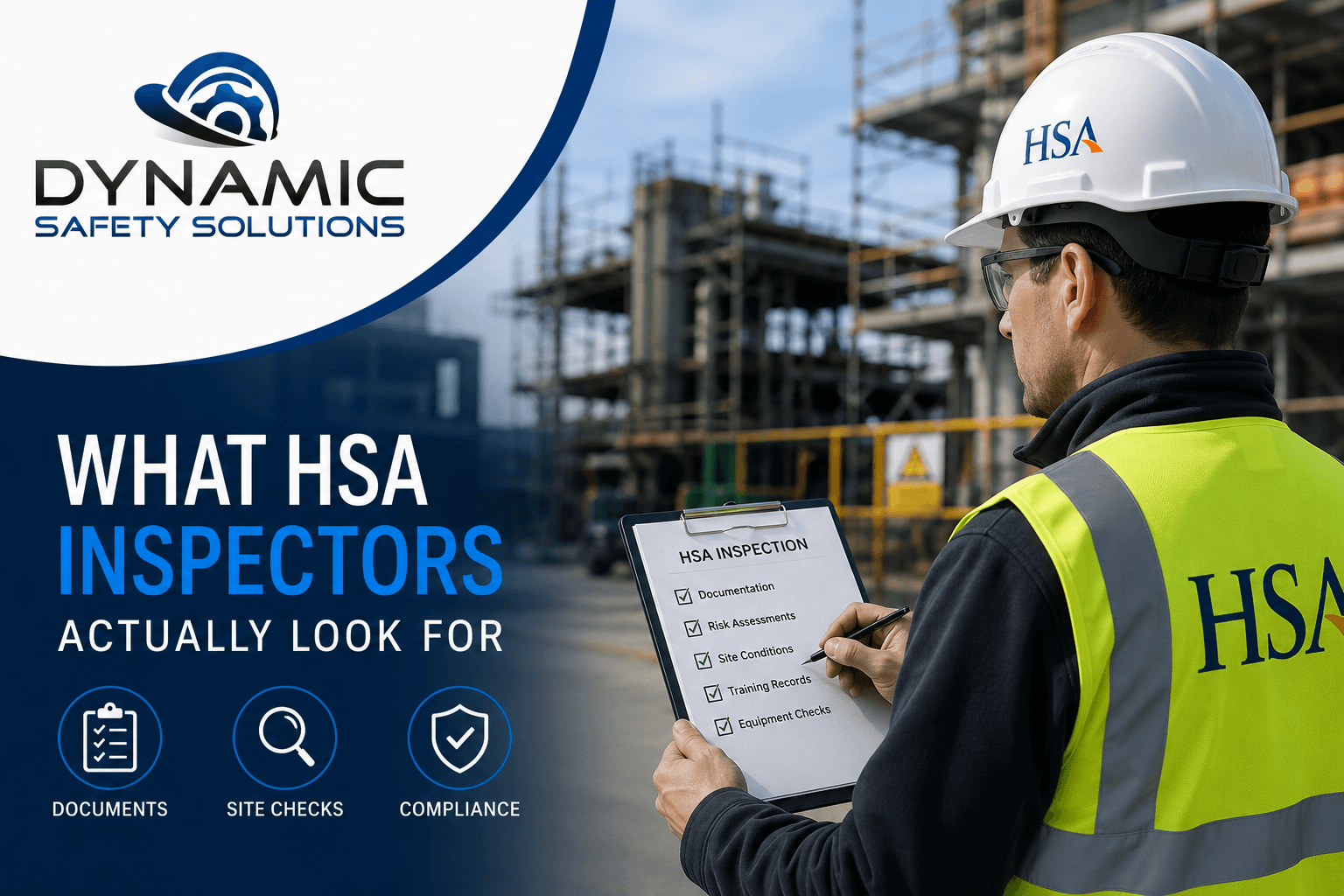
In reality, most HSA inspections follow a structured process focused on identifying workplace risks, reviewing compliance, and ensuring businesses are meeting their legal health and safety responsibilities.
Understanding what happens during a HSA inspection can help businesses:
- Prepare properly
- Improve compliance
- Reduce disruption
- Avoid enforcement action
- Identify gaps before they become serious issues
This guide explains what employers can expect during a HSA inspection in Ireland, what inspectors commonly check, and how businesses can prepare effectively.
What Is the HSA?
The HSA (Health and Safety Authority) is the national body responsible for enforcing workplace health and safety legislation in Ireland.
The HSA carries out inspections across:
- Construction
- Utilities
- Manufacturing
- Agriculture
- Warehousing
- Engineering
- Healthcare
- Offices and commercial workplaces
Inspectors assess whether businesses are complying with:
- Safety, Health and Welfare at Work Act 2005
- Construction Regulations
- General Application Regulations
- Industry-specific safety requirements
Learn more about our compliance support services:
Why Does the HSA Carry Out Inspections?
HSA inspections may happen:
- As part of routine inspection programmes
- Following workplace incidents
- After complaints or reports
- During targeted industry campaigns
- Following dangerous occurrences
- Due to high-risk activities on site
Some industries experience significantly higher inspection levels due to the nature of the work involved.
Construction, agriculture, utilities, and high-risk industrial environments are commonly targeted due to elevated workplace risk levels.
What Happens During a HSA Inspection?
While every inspection is different, most HSA inspections follow a similar structure.
Inspectors will generally:
- Introduce themselves
- Explain the purpose of the inspection
- Review workplace activities
- Identify hazards and risks
- Examine documentation
- Speak with management and workers
- Assess compliance levels
- Record findings and observations
The inspection may be relatively brief or may involve a detailed review depending on:
- Site size
- Work activities
- Risk level
- Previous compliance history
- Issues identified during inspection
What Documents Might the HSA Request?
One of the first things inspectors commonly review is safety documentation.
Typical documents requested may include:
- Safety Statement
- Risk Assessments
- Method Statements
- Training records
- Plant inspection records
- LOLER certificates
- Equipment maintenance records
- Contractor safety documentation
- Induction records
- Emergency procedures
- Accident records
- PPE records
Poor or outdated documentation is one of the most common issues identified during inspections.
Related services:
What Will Inspectors Check on Site?
HSA inspectors will typically review both documentation and physical site conditions.
Common areas inspected include:
- Housekeeping standards
- Working at height controls
- Excavation safety
- Traffic management
- Plant and machinery
- PPE usage
- Fire safety arrangements
- Welfare facilities
- Electrical safety
- Chemical storage
- Manual handling risks
- Safe access and egress
- Contractor coordination
- Site supervision
Inspectors may also observe work activities directly while they are taking place.
What Questions Might the HSA Ask?
Inspectors often speak with:
- Directors
- Site managers
- Supervisors
- Employees
- Contractors
Questions may relate to:
- Safety procedures
- Training received
- Emergency arrangements
- Risk controls
- Supervision levels
- Equipment inspections
- Site-specific hazards
The goal is usually to determine whether safety systems are genuinely being implemented — not just documented on paper.
Common Issues Identified During HSA Inspections
Some of the most common issues identified include:
- Missing or outdated risk assessments
- Poor housekeeping
- Inadequate fall protection
- Expired training records
- Unsafe plant operation
- Missing inspection records
- Inadequate supervision
- Poor traffic segregation
- Incomplete inductions
- Unsafe contractor management
Many businesses believe they are compliant until a formal inspection highlights gaps in their systems.
Can the HSA Shut Down a Site?
Yes.
If inspectors identify serious safety risks, they may issue:
- Improvement Notices
- Prohibition Notices
- Enforcement actions
A Prohibition Notice can stop specific work activities immediately if there is serious risk to workers.
This can lead to:
- Project delays
- Financial loss
- Reputation damage
- Insurance complications
- Contractual issues
How Can Businesses Prepare for a HSA Inspection?
The best approach is ongoing compliance rather than preparing only when inspectors arrive.
Businesses should ensure:
- Documentation is current
- Training is up to date
- Equipment inspections are completed
- Site inspections are carried out regularly
- Hazards are identified proactively
- Corrective actions are tracked
- Supervisors understand responsibilities
Regular internal audits and inspections can significantly improve inspection readiness.
Related reading:
- What Does a LOLER Inspection Include?
- Difference Between PSDP and PSCS
- What Training Is Required for Telehandler Operators in Ireland?
Why HSA Inspections Matter
HSA inspections are not simply about enforcement.
They are designed to:
- Improve workplace safety
- Reduce accidents
- Improve compliance standards
- Identify unsafe practices
- Protect workers
- Improve risk management
For many organisations, inspections also highlight operational weaknesses that may otherwise go unnoticed until:
- An incident occurs
- A client audit takes place
- Insurance issues arise
- Projects are disrupted
HSA Inspection Support with Dynamic Safety Solutions
At Dynamic Safety Solutions, we support businesses across Ireland with practical health and safety compliance solutions designed to improve audit readiness and workplace safety performance.
Our services include:
- Health & Safety Consultancy
- Site inspections and audits
- Risk assessments
- Safety Statements
- Training services
- Equipment inspections
- ISO 45001 support
- Contractor compliance support
Explore our services:
Frequently Asked Questions About HSA Inspections
What happens during a HSA inspection?
An HSA inspection usually involves reviewing workplace safety practices, documentation, equipment, training records, and site conditions to assess legal compliance.
What documents does the HSA request?
Inspectors commonly request Safety Statements, risk assessments, training records, inspection records, and contractor safety documentation.
Can the HSA issue fines or notices?
Yes. The HSA can issue Improvement Notices, Prohibition Notices, and other enforcement actions where serious compliance issues are identified.
Can the HSA arrive without notice?
Yes. Many HSA inspections are unannounced, particularly in higher-risk industries such as construction and agriculture.
How can businesses prepare for HSA inspections?
Businesses should maintain up-to-date documentation, complete regular inspections, provide proper training, and proactively manage workplace safety risks.
Final Thoughts
Most HSA inspections are designed to assess whether businesses are effectively managing workplace safety – not simply whether documents exist.
For many organisations, the biggest problems identified during inspections are not major incidents, but smaller gaps that have gradually developed over time.
Strong safety systems, regular inspections, proper training, and proactive risk management all play a major role in improving compliance and reducing operational risk before inspectors arrive on site.