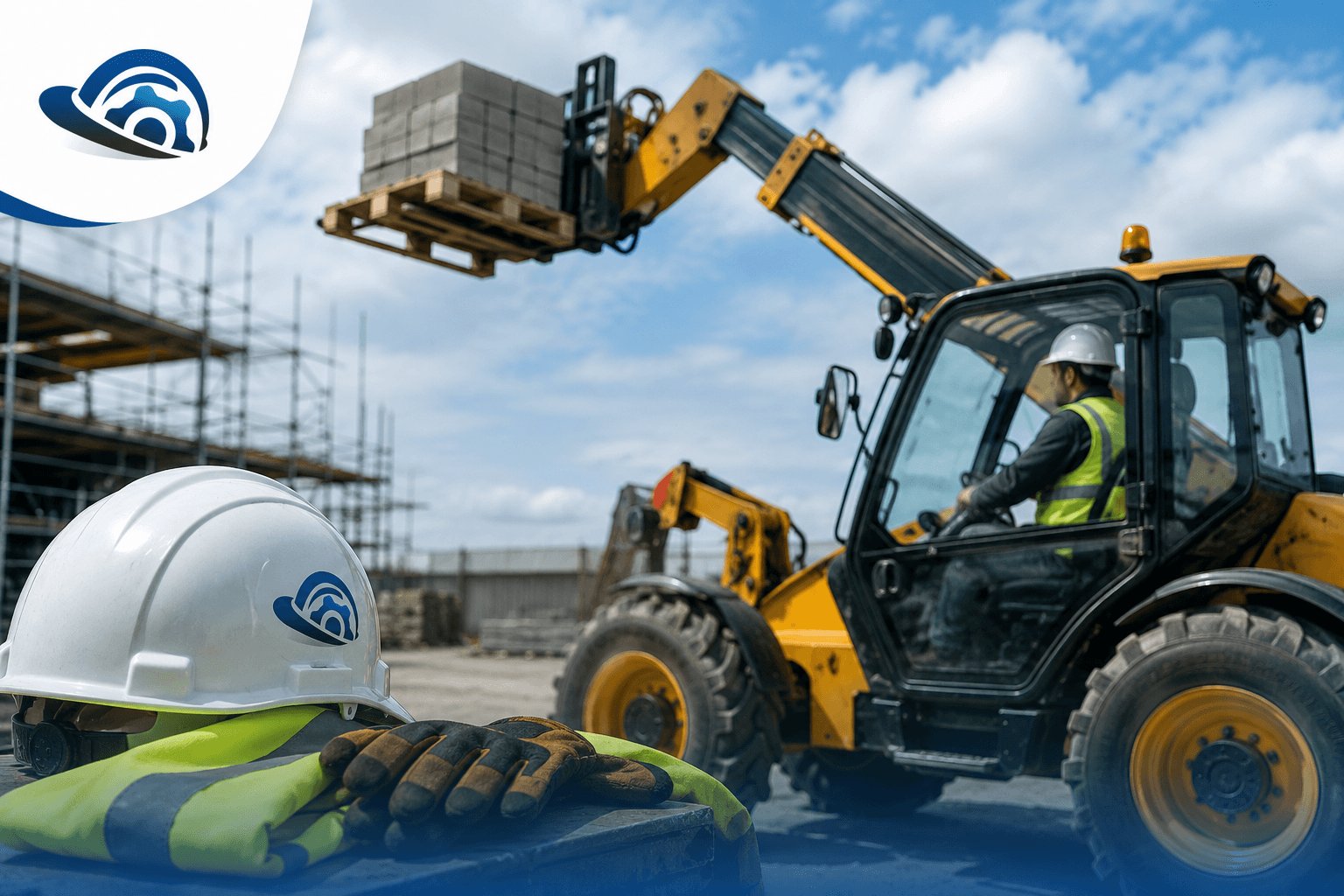
Telehandlers are one of the most commonly used pieces of plant equipment across construction, utilities, agriculture, and industrial sites throughout Ireland. They are also involved in a significant number of serious workplace incidents every year due to overturning, falling loads, poor visibility, and operator error.
Because of these risks, Irish health and safety legislation places clear responsibilities on employers to ensure telehandler operators are properly trained, competent, and certified where required.
So, what training is actually legally required for telehandler operators in Ireland?
Is Telehandler Training a Legal Requirement in Ireland?
Yes.
Under the Safety, Health and Welfare at Work Act 2005, employers must ensure that employees are provided with adequate training, instruction, and supervision for the safe operation of work equipment.
Where telehandlers are being used on construction sites, operators are generally required to hold an appropriate SOLAS CSCS certification.
This means:
- Operators must be trained
- Operators must be assessed as competent
- Employers must be able to demonstrate this competence
- Training records and certification should be available if requested during audits or HSA inspections
If your business is operating telehandlers on construction, utilities, infrastructure, or industrial projects, ensuring operators are properly certified is an essential part of maintaining compliance.
You can explore our full range of construction and plant machinery courses here:
What Is the Required Certification for Telehandler Operators?
The recognised certification in Ireland is typically:
SOLAS CSCS Telescopic Handler Certification
This course is designed specifically for telehandler (teleporter) operators working within construction and related industries.
Successful candidates receive:
- A SOLAS CSCS Registration Card
- QQI certification
- Operator certification generally valid for 5 years
This certification is widely recognised across:
- Construction sites
- Utilities projects
- Civil engineering works
- Infrastructure projects
- Contractor-controlled environments
Businesses operating lifting equipment should also ensure statutory inspections and lifting compliance requirements are being managed correctly alongside operator training.
Learn more about:
What Does Telehandler Training Cover?
A proper telehandler training course should include both theory and practical assessment.
Topics typically include:
- Safe operation of the machine
- Stability and load handling
- Load charts and rated capacities
- Pre-use inspections
- Daily defect checks
- Safe lifting practices
- Working on uneven ground
- Attachments and accessories
- Visibility and blind spots
- Pedestrian exclusion zones
- Refuelling and battery safety
- Legal responsibilities
- Emergency procedures
Daily inspections are a major part of maintaining safe operation standards on site. Many businesses are now moving away from paper-based systems towards digital inspection processes for improved compliance visibility and audit readiness.
Read more here:
Do Experienced Operators Still Need Certification?
This is one of the biggest misconceptions in the industry.
Many operators have years of practical experience but no formal certification.
In most contractor-controlled environments, experience alone is no longer considered sufficient. Employers and principal contractors increasingly require:
- Formal telehandler certification
- Refresher training
- Evidence of competence
- Up-to-date operator cards
This is especially important for businesses working on larger contractor frameworks or projects requiring strong compliance standards such as:
- Safe-T-Cert
- ISO 45001
- Principal contractor audits
- Utility contractor approval systems
You can learn more about improving operational compliance standards here:
What About Agricultural Telehandler Operators?
Agricultural telehandler use has become a major focus area in recent years due to serious incidents involving farm machinery.
While agriculture has historically operated differently to construction, the same legal duties around competence and safe operation still apply under Irish health and safety legislation.
The HSA has increased focus on:
- Operator competence
- Safe vehicle movement
- Training records
- Machine suitability
- Maintenance and inspection
If telehandlers are being used regularly on farms, formal operator training is strongly recommended.
You can also read our article covering recent changes impacting telehandler requirements for farmers:
Businesses operating additional agricultural or construction plant equipment may also benefit from:
How Often Should Telehandler Training Be Refreshed?
Telehandler certification is commonly renewed every 5 years.
However, refresher training may be needed sooner where:
- An operator has not used the equipment recently
- Unsafe operation has been identified
- A near miss or incident has occurred
- New equipment or attachments are introduced
- Site conditions change significantly
Refresher training is an important part of maintaining operator competence and reducing operational risk.
For businesses managing wider health and safety responsibilities, regular auditing and compliance reviews are also important.
Related services:
What Else Is Required Beyond Operator Training?
Training alone is not enough.
Employers also need to ensure:
- Telehandlers are inspected and maintained
- Daily pre-use checks are completed
- Operators are supervised appropriately
- Lifting operations are properly planned
- Ground conditions are assessed
- Pedestrian segregation measures are in place
Many businesses only discover gaps in these areas during:
- HSA inspections
- Client audits
- Incident investigations
- Insurance reviews
Improving safety systems proactively can significantly reduce risk exposure and operational disruption.
Further reading:
Common Mistakes Employers Make
Some of the most common compliance issues identified during audits and inspections include:
- Expired telehandler cards
- No evidence of operator assessment
- Operators using unfamiliar attachments
- No refresher training records
- Missing pre-use inspection systems
- Assuming experience equals competence
- Poor traffic management around plant equipment
These issues often only become visible after:
- A workplace incident
- A near miss
- A client audit
- HSA intervention
This is why many organisations are moving towards more structured compliance systems and regular training reviews.
Telehandler Training with Dynamic Safety Solutions
At Dynamic Safety Solutions, we provide practical telehandler and plant machinery training designed to help businesses improve safety, compliance, and operator competence across Ireland, Northern Ireland, and the UK.
Our training can be delivered:
- On-site at your premises
- At designated training locations
- For novice and experienced operators
- For construction, utilities, industrial, and agricultural sectors
Explore our training services:
Final Thoughts
Telehandler training is not simply a box-ticking exercise. Proper operator competence plays a major role in reducing:
- Workplace accidents
- Equipment damage
- Downtime
- Enforcement risk
- Liability exposure
For many businesses, the real issue is not whether operators have experience – it is whether that competence can be demonstrated when it matters most.
Whether you operate in construction, utilities, agriculture, or infrastructure, ensuring operators are properly trained and certified is now an essential part of maintaining a safe and compliant operation.
If you would like to discuss telehandler training or wider plant safety compliance requirements, contact the team at Dynamic Safety Solutions.